


What made you apply for the grant?
My initial interest in the research grant was to work more closely with the materials at the PKL Center as well as the space itself. My research proposal was nebulous in its attempt to highlight different facets of motion; from the quantum level to social movements. I aimed to ground it further with the materials at the PKL center whether through the scrapbooks of PKL, the library, or the artwork collection.
What are the highlights of doing research / implementing your project at the PKL Center?
There were many highlights during the research process and implementing the project at the PKL Center. As noted above, the proposal itself was looking for form and ground. The first highlight for me was reading through the book of manuscripts by Purita. I felt a sense of connection with Purita as she attempted to find forms of modernity in/through Philippine Art. From writing about meeting with Sukarno to roughly articulating her perspective on youth activism, it felt like a “struggle” a la her book. The second highlight was working with the space. It is not a white cube. There are certain spatial limitations such as the research tables, the library, Purita’s bust, and the vitrines. These limitations made me more conscious about working with the space and the KLFI team, opening up the research with more collaborators.
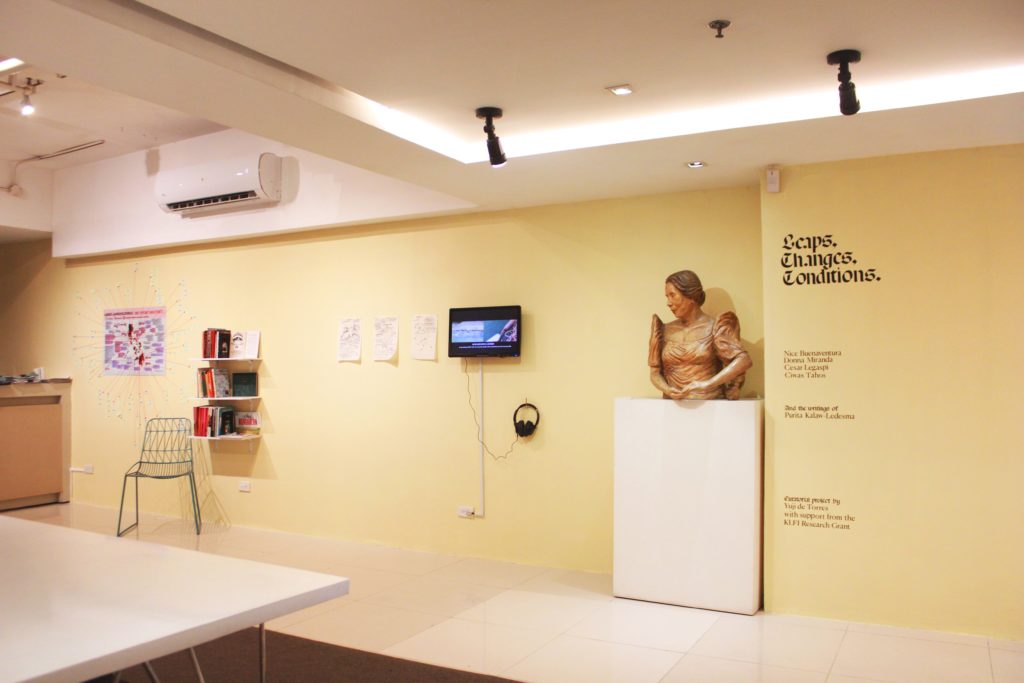
Installation view. Photo by Yuji de Torres.
How was your experience working with the KLFI team?
The KLFI team was very structured and encouraging. They articulated the timeline needed for the project and were able to accommodate changes that needed to be made. Mayumi and Lk gave me critical feedback on the project and encouraged me to look further into the materials from PKL. While writing the revised proposal and mapping out the floorplan for the project, they helped me in honing the proposal to the public of the PKL Research Center as well as the terrain of the center itself. As noted earlier, the spatial limitations of the research center were tricky, especially the vitrines. Fortunately, the KLFI team was very encouraging in figuring out ways to work with these limitations. Ms. Clavel also provided critical feedback on the space as well as pointing connections with the collections. She pointed me to resources that might be crucial to the research project from the initial research phase as well as during ingress.
How are you planning to expand your project after the grant?
After the research grant, I am planning to write a reflection and/or update on the research. Since the research found its form as a “curatorial research project,” there is a lot to process on the different registers of this project. There is the exhibitionary which, I hope, thought through a sensing of motions in space and intuiting form. There is also the paracuratorial through the public programs and thinking through the practices of Nice Buenaventura, Donna Miranda, and Ciwas Tahos. This further opened up the project with new collaborators and activating the artworks. I am also developing a research expanding on motions through my nomadic curatorial initiative kiat kiat projects with Arianna Mercado. Let’s see where the motion goes!
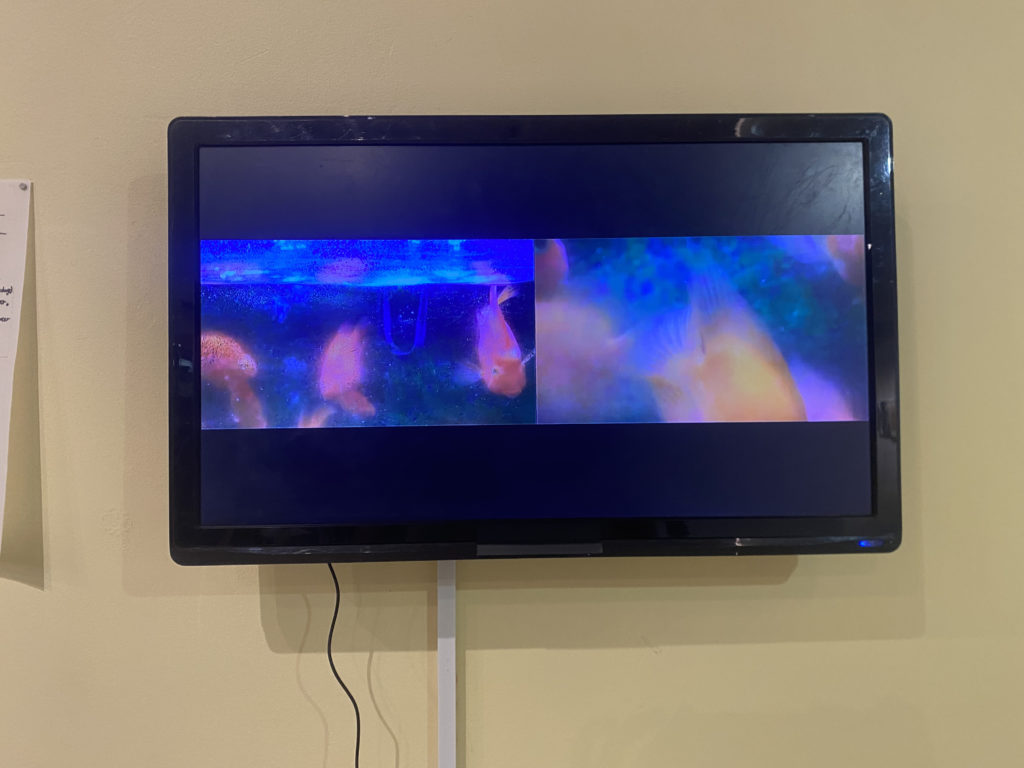
Still from “The Land in the Middle of the Pond” by Ciwas Tahos. Photo by MJ Barrientos.
Any tips for those currently writing their proposals?
Visit the PKL Center. Its resources have a lot to offer and there are as many ways to go about your research through this research grant. Scrapbooks alone are vast and wide-ranging. In this vastness, another tip would be to ask the KLFI team for leads on the topic that you are interested in. They are helpful, encouraging, and knowledgeable about the KLFI Collection. It would also be helpful to look at secondary sources on what the collection entails. “The Life and Times of Purita Kalaw-Ledesma” helped me in scoping what materials are in the archives and what starting points have been identified.
Yuji de Torres is a cultural worker, working through curatorial research and as an educator. In 2018, he co-founded kiat kiat projects, a nomadic curatorial initiative. He received his MA in Critical and Curatorial Studies of Contemporary Art from the National Taipei University of Education in 2023. He is currently an Assistant Professor at the University of the Philippines-Diliman, College of Fine Arts, Department of Theory.